Hausa Poetry & Songs
Hausa has a rich literature in poetry and song. In terms of the texts, there is really no difference between poetry and song. Hausa has a single word, waka (plural wak’ok’i), for this type of linguistic artistic expression. All wak’ok’i have certain things in common:
Sung oral presentation: Artists compose their works for sung performance. One never hears spoken recitation typical of oral performance of European poetry, and silent reading of poetry is essentially unheard of except perhaps in certain modern intellectual circles.
Composition following strict metrical patterns: Hausa wak’ok’i always follow fixed rythmic patterns. A text not following such patterns, such as the “free verse” of nearly all modern English “art” poetry, would not be wak’a. The basis for metrical patterns in Hausa is syllable weight (or “long” and “short” syllables). Click on the links above for more information.
One can broadly distinguish two co-existing traditions in Hausa poetry and song. The Hausa terms for these traditions are wak’ar baka ‘oral song’ and rubutacciyar wak’a‘written poetry’. These terms are a bit misleading since both types are intended for oral performance, but the former is composed in oral form and would never be written down by the artist, whereas the latter is generally composed in written form, then read or performed from memory on the basis of a written text
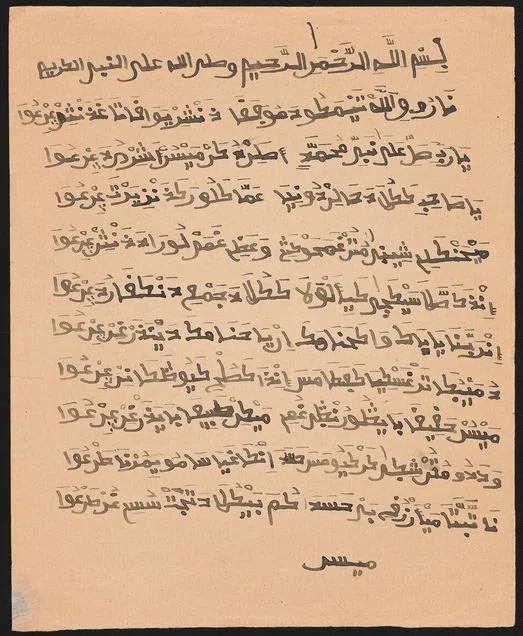
A Poem on Friends and Relations (Waƙar Ƴan Uwa)
Images of Hausa Ajami Texts, used to write the Holy Qur’an, letters, peoms, songs, and other forms of messages and data collection in pre-colonial Hausa states covering regions such as Northen Nigeria, Mali, and Niger.
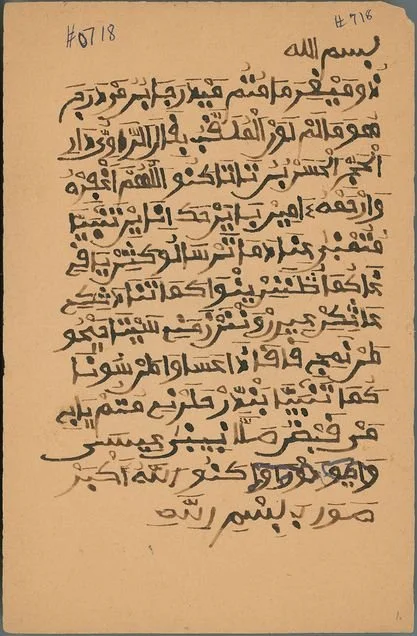
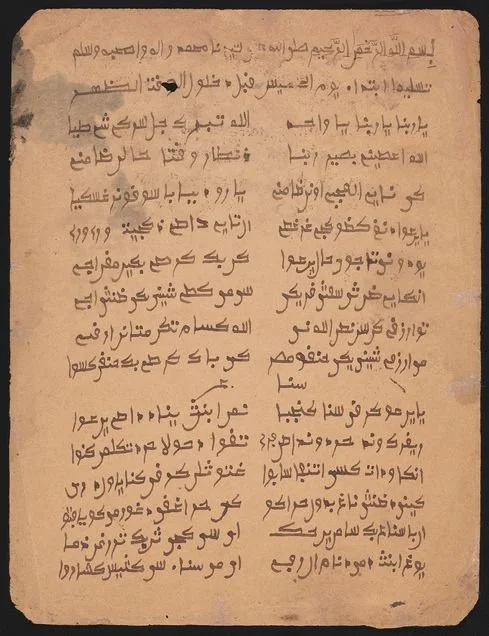
The Character of Our Times (Halin Zamani)
A Letter to Malam Ƙalarawi (Wasiƙa zuwa ga Malam Lawan Ƙalarawi)
Rhythm of Yesterday
Collection I
Hausa Me Ban Haushi
Saba da neman gaskiya duk nisa,
Sarari da b’oye kadan ka so bunk’asa.Ga gargad’i ya zuwa gare mu, zumaina,
‘Ya’yan Arewa da wanda duk ke Hausa.
‘Yan Arewa Ku Bar Barci
Shata: A’a, ‘yan arewa a bar barci,
Najeriyarmu, akwai dad’i.
To!‘Yan Amshi: A’a, ‘yan arewa a bar barci,
Najeriyarmu, akwai dad’i.Shata: K’asar Afuruka, bak’ar fata,
K’asar Afruruka, bak’ar fata,
In ka yi yawo ciki nata,
Duk ba kaman Najeriya, gidan dad’i,
Najeriya k’asar farin jini,
Najeriya ce gidan dad’i,
Balle arewa uwar dad’i.
To!‘Yan Amshi: A’a, ‘yan arewa a bar barci,
Najeriyarmu, akwai dad’i.